4.6.1 The impact of timing on the response’s effectiveness
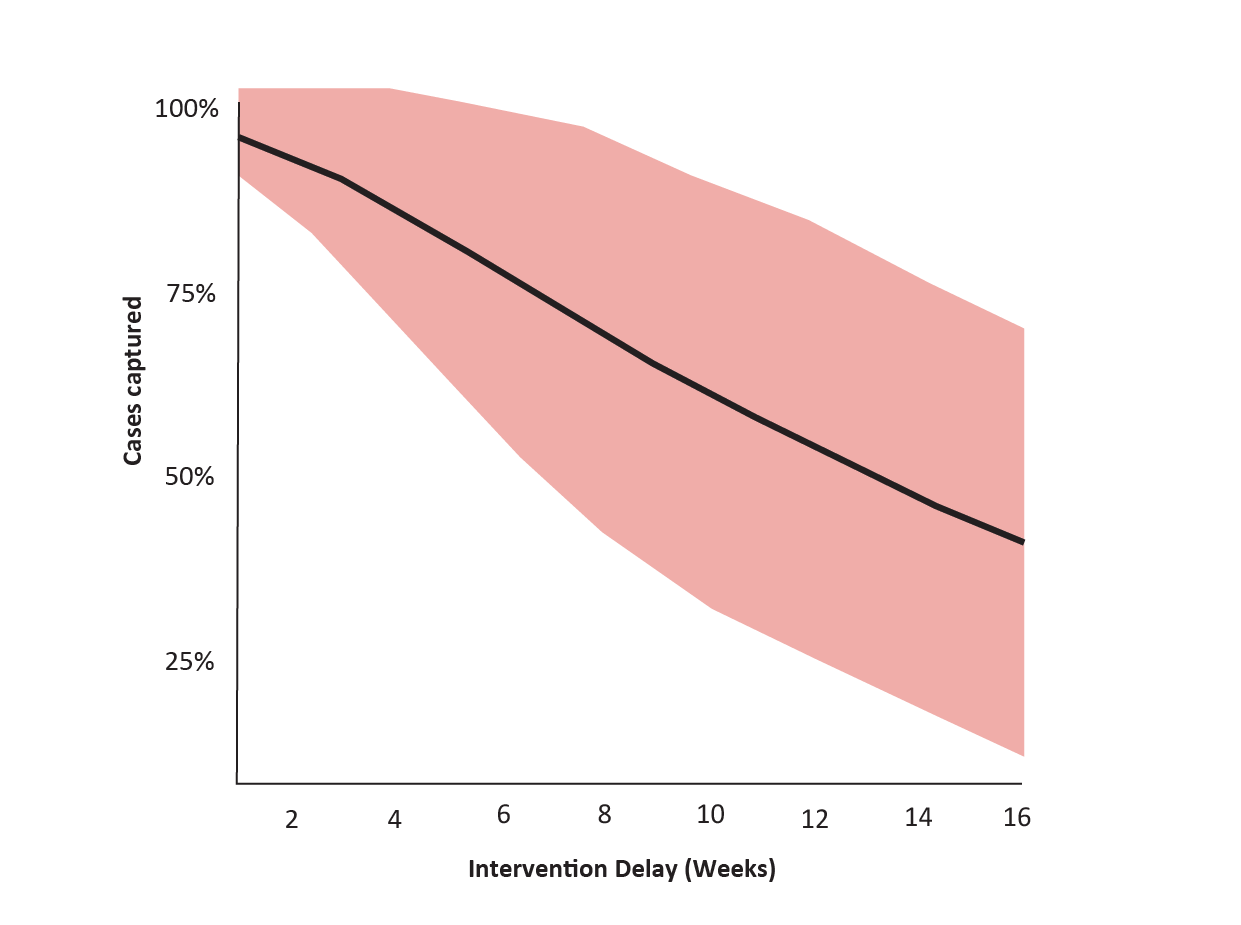
Timing has a significant impact on the response’s effectiveness. As experience and epidemiological analyses have shown, each additional week of delay results in a 2% to 5% reduction in the total number of cases prevented, and post-peak interventions have less of an impact.
Figure 4.1 - Estimated number of measles cases treated/prevented aCitation a.Here we assume 100% vaccine effectiveness and immediate immunity after vaccination by outbreak response vaccination as a function of timing
4.6.2 Timeline of the response
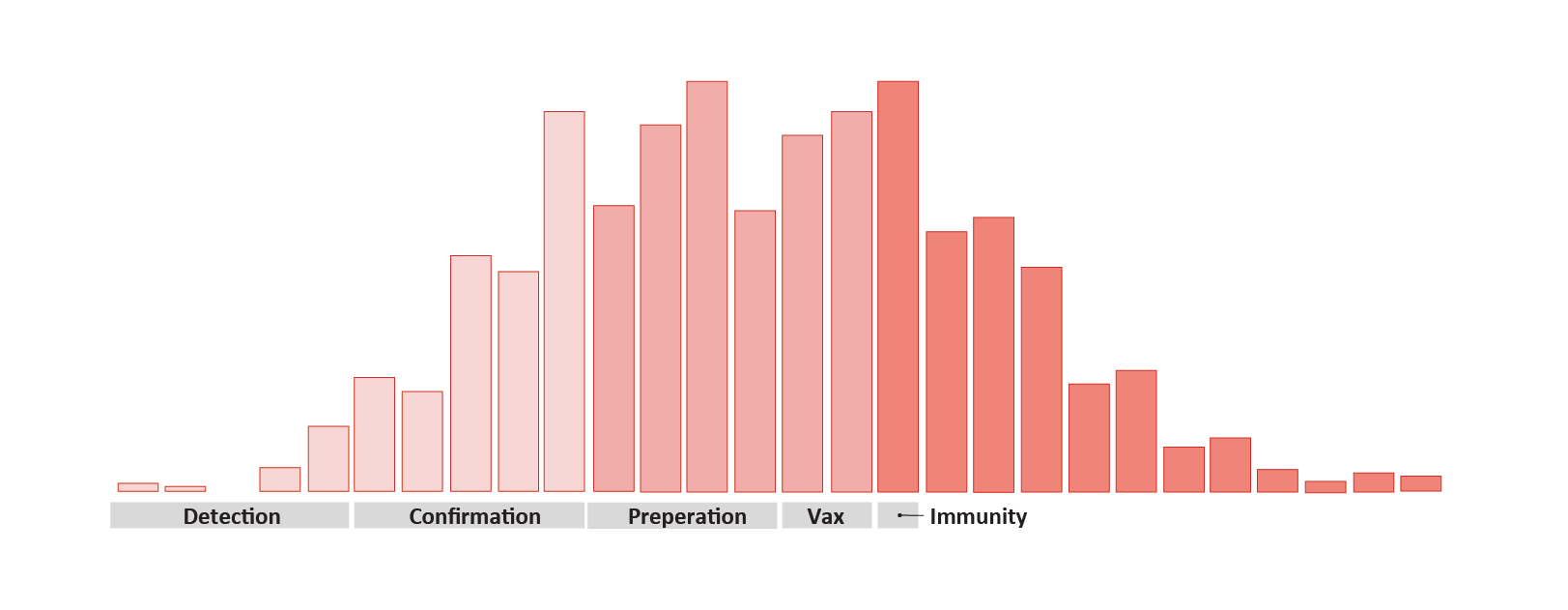
The timeline of the response can be broken down into several phases. For example:
1. Detection of an outbreak
2. Confirmation of the outbreak
3. Logistical and transport-related preparations
4. Roll-out of the intervention
5. Development of immunity (for vaccination-based interventions)
Figure 4.2 - Number of measles cases by week and activities conducted
The exact requirements for each component can vary from one location to another. For example, some countries may require a minimum number of positive laboratory samples to confirm an outbreak. Similarly, the time needed for each phase will depend heavily on the constraints of the context and can be affected by factors like:
- The accessibility of the laboratory for confirmation
- Transport difficulties due to the landscape and/or security
- The estimated size of the population to be vaccinated during the intervention
- Political considerations or concurrent interventions.
4.6.3 Minimising delays
In practice, many delays in the response are hard to avoid. It is not always easy to shorten the time needed to ship vaccines to where the outbreak is happening. Other delays, however, may be easier to shorten. For example:
- Use an early warning system with a clear and predefined outbreak validation protocol to minimise the time needed for identifying and confirming outbreaks
- Have pre-established contacts to help with preparations (at local laboratories, with officials in charge of vaccination, or at the Ministry of Health, for example).
- Clarify in advance the process for obtaining vaccines and identify options for importing them, should that be necessary.
4.6.4 The role of late interventions
While minimising the response time is important, even a belated response (after the peak, as the outbreak is waning) is sometimes useful. In places where there is little access to care, for example, if managing cases is essential, adding a vaccination response is still pertinent, even after the peak. Also, in large-scale outbreaks, the expected number of cases even in the waning phase can be so high that a vaccination campaign is still useful.
- (a)
Here we assume 100% vaccine effectiveness and immediate immunity after vaccination